
Buddhist Circuits of Indonesia
- Borobudur.Indonesia@BuddhistCircuits.com
About BOROBUDUR
In the Beautiful Himalayan Nation of Nepal, Together We Restore The Glory of Borobudur.
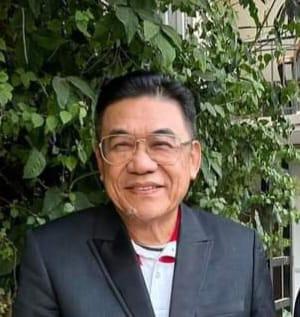
Drs. Efendi Hansen
The Greatest Buddhist Monument in the World
ABOUT BOROBUDUR TEMPLE
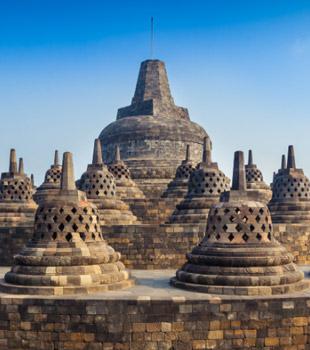
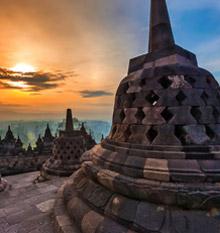
Borobudur Temple was established in the 9th Century by the Gunadharma from the Patan Bazar of Lalitpur. It was constructed during the reign of Shailendra Dynasty. It is located in the Central Java,Indonesia. It is a Mahayana Buddhist Temple based on Buddhist and Hindu Gupta architecture. It is considered as One of Seven Wonders of the World. The central sphere represents Nirvana. The material used for the construction was Gray Andestine Stone. The 7 Floors of this temple represent the 7 sects of Buddhism:
a) Mahayana
b) Hinayana
c) Vajrayana
d) Theravada
e) Tantrayana
f) Sakya
g) Zen
This Buddhist Wonder was listed in the UNESCO World Heritage Site in 1991. It is infact the largest Buddhist Temple in the World. It is also the symbol of Religious Tolerance between the people of Hinduism and Buddhism. It had been abandoned for centuries under the volcanic ash and jungle growth. It was finally rediscovered after the British Capture by Lieutenant Governor- General Thomas Stamford Raffles. During the Full Moon in May or June, Buddhists observe Vesak commemorating the Birth, death and time when Siddhartha Gautam attained Enlightened. It is also a part of Borobudur Temple Compound where there are other temples such as:
a) The Borobudur Temple
b) The Mendut Temple
c) The Pawon Temple
In the Borobudur Temple, the way to top is through the 3 levels of Buddhist Cosmology:
a) Kamadhatu
b) Rupadhatu
c) Arupadhatu
Some people that the temple was once a lake and the Borobudur temple was built to represent the lotus over the lake.
SIMILARITY WITH NEPAL
1. Carvings in the gate look similar to that of the Golden Temple.
2. Lions in both temple have faces resembling that of monkey (because lions were not found in both countries)
3. Six statues of Buddha orientated in 6 different directions at Borobudur is also similar to the arrangement in Golden Temple and the Swayambunath in the Kathmandu valley.
4. Buddha’s eyes in the pillars of the Mendut Temple also similar to those in Swayambunath.
5. Both Swayambhunath and Borobudur have been built on top of a hill.
ORIGIN OF THE NAME BOROBUDUR
1. According to Indonesian Philosopher/Professor Poerbatjakara
Boro =Monastery/Vihara
Budur= name of place
Borobudur = Vihara in Budur
2. Boro= Big
Budur = Buddha
3. According to de Casparis,
Borobudur from Bharabhudura = Bhumisambharabhudura = The Mountain of Virtue from the 10 phases of Bodhisattva.
It lists the progressively superior stages as:
(1) pramuditā (“joyful,” with the thought that, having begun the career of a bodhisattva, he will attain enlightenment and will help others), (2) vimalā (“free from impurities”),
(3) prabhākarī (“luminous” with the noble doctrine), (4) arciṣmatī (“brilliant,” the rays of his virtue consuming evil passions and ignorance),
(5) sudurjayā (“hard to conquer”), (6) abhimukhī (“turning toward” both transmigration and nirvana),
(7) dūraṅgamā (“far-going”),
(8) acalā (“immovable”),
(9) sādhumatī (“good-minded”),
(10) dharmameghā (showered with “clouds of dharma,” or universal truth).
Testimonials

User One
DesignationBorobudur is a 9th-century Mahayana Buddhist temple in Magelang Regency, not far from the city of Magelang and the town of Muntilan, in Central Java, Indonesia. It is the world's largest Buddhist temple.

User Two
DesignationThe temple design follows Javanese Buddhist architecture, which blends the Indonesian indigenous tradition of ancestor worship and the Buddhist concept of attaining nirvāṇa.

User Three
DesignationBorobudur is the largest Buddhist temple in the world, and ranks with Bagan in Myanmar and Angkor Wat in Cambodia as one of the great archeological sites of Southeast Asia.